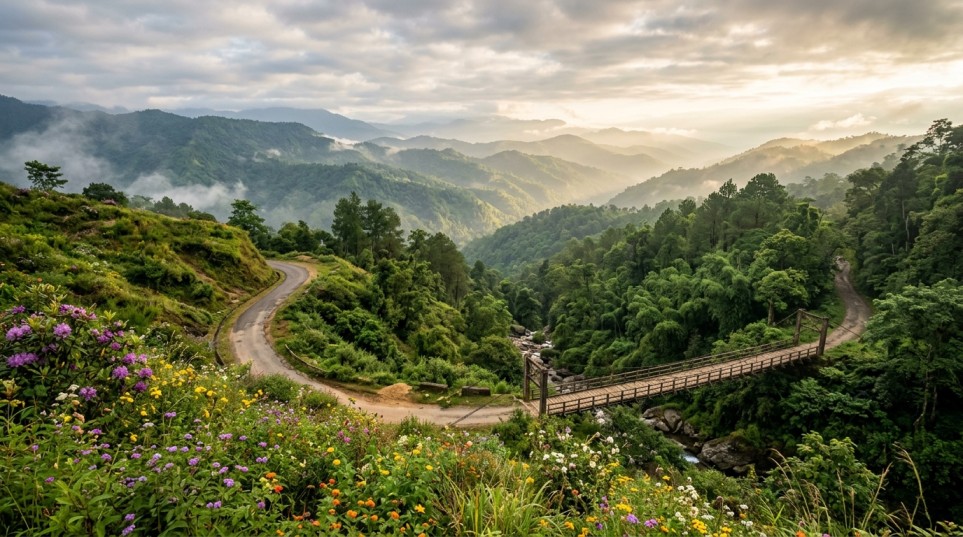
Northeast India is one of the best summer travel destinations in the country — and for good reason. When temperatures in cities like Delhi, Mumbai, and Kolkata soar past 40°C, the eight states of Northeast India enjoy a cool, pleasant climate ranging between 15°C and 25°C, making it a genuine summer paradise.
So, what are the top summer destinations in Northeast India? In short: Shillong and Gangtok lead the list for accessibility and infrastructure, while Tawang, Ziro Valley, and Dawki are perfect for travelers seeking offbeat experiences. Whether you are planning a family vacation, a romantic getaway, or a solo adventure, this guide covers everything — from what to see and where to stay, to how to get there and what it will cost.
From the Scotland-of-the-East charm of Meghalaya to the high-altitude monasteries of Arunachal Pradesh and the wildlife-rich plains of Assam, every corner of this region offers something unique and unforgettable.
Plan Your Trip with Wizzride Wizzride offers shared and reserved cab bookings across all major Northeast destinations. Flight + cab in one booking. Visit wizzride.com
Why Northeast India Is Perfect for a Summer Vacation
Unlike most popular Indian hill stations that get overcrowded during May and June, Northeast India remains relatively undiscovered by mass tourism. Here is why summer (March to May) is the ideal window to visit:
Temperature15°C–25°C across major hill stations — no extreme heat, no heavy snowfall
Fewer crowdsFar fewer tourists compared to Shimla, Manali, or Mussoorie in peak summer
Pre-monsoon bloomLush landscapes, flowering valleys, and full-flowing rivers before rains set in
Lower costAverage trip cost 30–40% lower than equivalent Himachal Pradesh or Uttarakhand trips
Cultural richnessSeveral tribal and Buddhist festivals happen between March and May
Better connectivityDirect flights from Kolkata, Guwahati, and Delhi now connect most major hubs
01
Shillong, Meghalaya — Scotland of the East
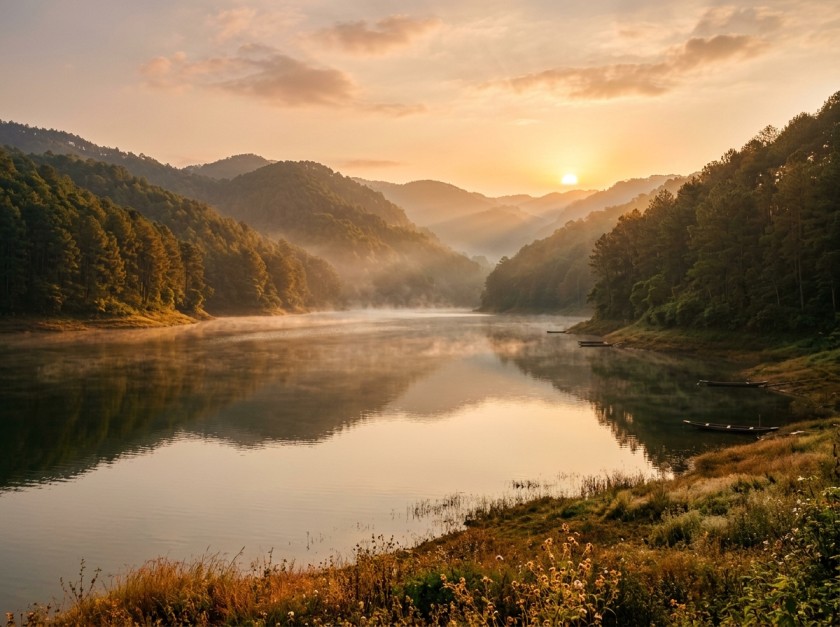
Shillong is the most accessible and well-rounded summer destination in Northeast India. The capital of Meghalaya sits at an altitude of 1,491 metres and maintains an average summer temperature of 16°C–22°C, making it comfortably cool even in May. The city earned its nickname from British colonialists who found its rolling pine-covered hills reminiscent of the Scottish Highlands.
Beyond its natural beauty, Shillong has a vibrant urban culture — it is widely considered the rock music capital of India, with a thriving café scene and live music venues. The local Khasi culture adds a fascinating layer of matrilineal tradition unlike anywhere else in India.
Top Attractions
- Umiam Lake (Barapani): A stunning reservoir 15 km from the city, ideal for boating and lakeside walks
- Elephant Falls: A three-tiered waterfall set in lush greenery, best visited in the morning
- Shillong Peak: The highest point in Meghalaya at 1,965 m, offering panoramic views of the Brahmaputra plains
- Ward’s Lake: A colonial-era artificial lake in the heart of the city
- Police Bazaar: The city’s main market for local produce, traditional crafts, and street food
Quick Facts
| Altitude | 1,491 m |
| Summer Temperature | 16°C – 22°C |
| Best Time to Visit | March – May |
| Nearest Airport | Umroi Airport (30 km) | Guwahati Airport (100 km) |
| Average Trip Cost | ₹8,000 – ₹15,000 per person for 3 nights (budget to mid-range) |
| Permit Required | No (Indian nationals) |
| Wizzride Route | Guwahati Airport → Shillong (shared or reserved cab) |
🚖 Travelling from Guwahati Airport to Shillong? Wizzride offers pre-booked shared and reserved Innova Crysta cabs directly from the airport arrivals gate to Shillong. Read the complete Guwahati Airport to Shillong travel guide or book at wizzride.com.
02
Gangtok, Sikkim — Gateway to the Himalayas
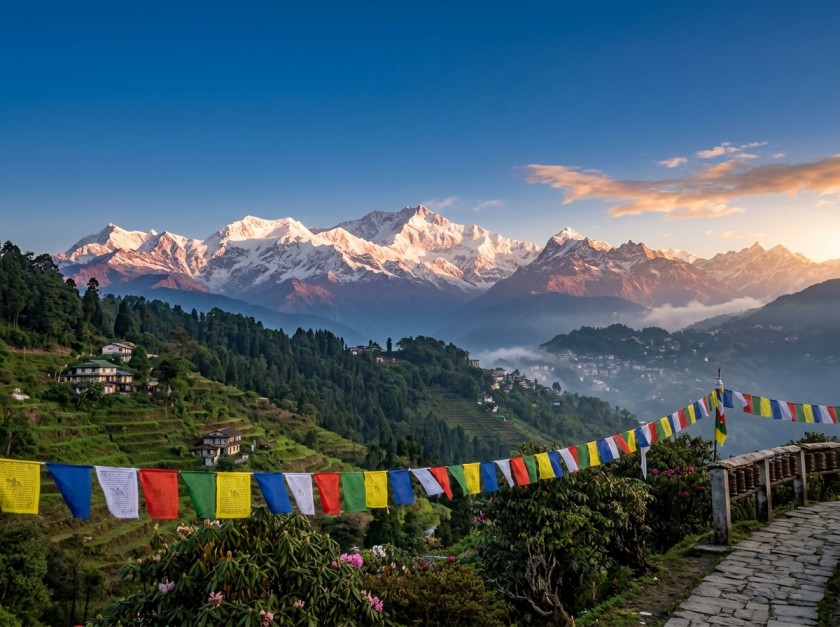
Gangtok is arguably the best-developed hill station in Northeast India, combining Himalayan scenery with excellent tourist infrastructure. At 1,650 metres above sea level, it offers clear views of Kanchenjunga — the world’s third-highest peak — on pre-monsoon mornings.
The city is known for its cleanliness, well-maintained roads, and a pedestrian-only promenade called MG Marg lined with cafés, shops, and restaurants. Gangtok also serves as the base for excursions to Nathula Pass on the India-China border and Tsomgo Lake, both accessible in summer.
Top Attractions
- MG Marg: The lively car-free promenade — ideal for evenings, street food, and local handicraft shopping
- Tsomgo (Changu) Lake: A glacial lake at 3,753 m, surrounded by snow-covered peaks in early summer
- Rumtek Monastery: One of the most significant Buddhist monasteries in India, 24 km from Gangtok
- Nathula Pass: A high-altitude border pass at 4,310 m — requires a permit, available in Gangtok
- Hanuman Tok & Ganesh Tok: Twin viewpoints offering sweeping Himalayan panoramas
Quick Facts
| Altitude | 1,650 m |
| Summer Temperature | 10°C – 20°C |
| Best Time to Visit | March – May (before monsoon) |
| Nearest Airport | Bagdogra Airport, West Bengal (124 km) |
| Average Trip Cost | ₹10,000 – ₹20,000 per person for 3 nights |
| Permit Required | PAP for Nathula Pass only (arrange in Gangtok, 1–2 days advance) |
| Wizzride Route | Bagdogra Airport → Gangtok (shared or reserved cab) |
🚖 Travelling to Gangtok from Bagdogra Airport? Wizzride offers pre-booked shared and reserved Innova Crysta cabs through the scenic Teesta Valley. Read the complete Bagdogra to Gangtok shared cab guide.
03
Tawang, Arunachal Pradesh — Hidden Himalayan Gem ILP Required
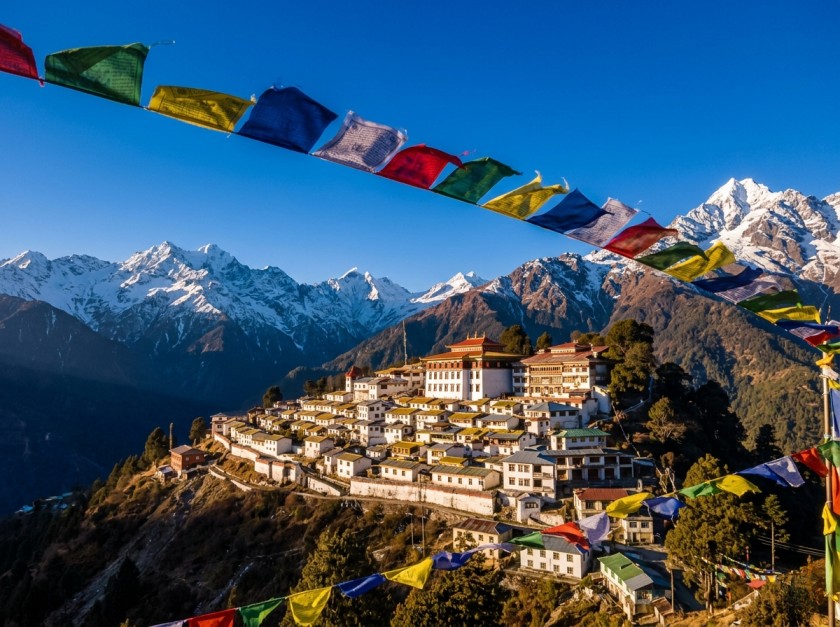
Tawang is one of the most dramatic and spiritually significant destinations in all of India. Located at 3,048 metres in western Arunachal Pradesh, just kilometres from the Bhutan and China borders, the journey itself — crossing Sela Pass at 4,170 metres — is a bucket-list experience.
Tawang Monastery, founded in 1681, is the largest monastery in India and the second-largest in the world after the Potala Palace in Lhasa. In summer, surrounding valleys bloom with wildflowers and skies clear to reveal stunning 360-degree mountain panoramas.
Top Attractions
- Tawang Monastery: A stunning 17th-century monastery at 3,500 m, housing rare Buddhist scriptures and a 8-metre gilded Buddha statue
- Sela Pass: A high-altitude mountain pass at 4,170 m with a sacred lake and war memorial
- Madhuri Lake (Shonga-tser Lake): A stunning glacial lake featured in Bollywood films, 35 km from Tawang
- Nuranang Falls (Jung Falls): A powerful 100-metre waterfall accessible en route to Tawang
- Tawang War Memorial: A tribute to soldiers of the 1962 India-China war
Quick Facts
| Altitude | 3,048 m |
| Summer Temperature | 5°C – 15°C (carry warm layers) |
| Best Time to Visit | April – June |
| Nearest Airport | Tezpur (317 km) | Guwahati (450 km) |
| Average Trip Cost | ₹15,000 – ₹25,000 per person for 5 nights |
| Permit Required | Inner Line Permit (ILP) — mandatory for all Indian nationals |
| How to Get ILP | Apply online at eilp.arunachal.gov.in — ₹100, processed in 24–48 hrs |
Permit Alert Apply for your Arunachal Pradesh ILP at least 5–7 days before travel at eilp.arunachal.gov.in. Cost: ₹100. Processing: 24–48 hours. Carry 5–6 passport-size photos and government ID copies for checkposts.
04
Cherrapunji (Sohra), Meghalaya — Land of Living Root Bridges
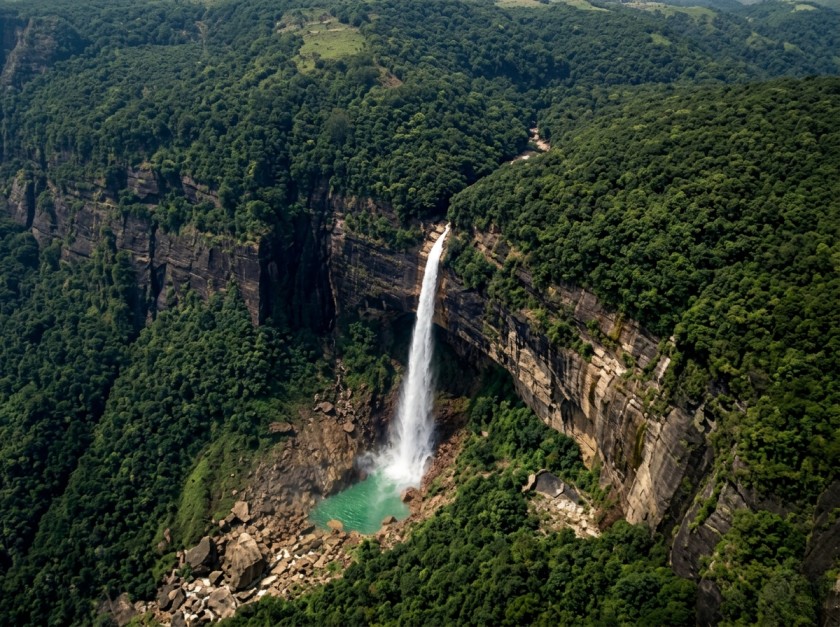
Cherrapunji, officially known as Sohra, holds the record for the highest rainfall ever recorded in a single month. But its summer months from March to May are when the landscape is most magical — before the monsoon hits full force, the waterfalls are thunderous, valleys vivid green, and the iconic living root bridges are easily accessible.
The living root bridges of Cherrapunji are a remarkable feat of bioengineering practised by the Khasi people for over 500 years. Tree roots from Ficus elastica are trained over decades to grow across rivers, creating natural bridges that grow stronger with age. The double-decker root bridge at Nongriat is the most famous.
Top Attractions
- Nohkalikai Falls: India’s tallest plunge waterfall at 340 m — the pool at the base has a striking blue-green colour
- Double-Decker Root Bridge, Nongriat: A 3-hour trek from Tyrna village — one of the most unique natural experiences in India
- Mawsmai Cave: A naturally lit limestone cave system, easily walkable, 6 km from Cherrapunji
- Seven Sisters Falls: A seven-segmented waterfall visible just before and during monsoon
- Dainthlen Falls: A wide curtain waterfall with a fascinating local legend
Quick Facts
| Altitude | 1,484 m |
| Summer Temperature | 16°C – 22°C |
| Best Time to Visit | March – May (waterfalls full, treks accessible) |
| Nearest Airport | Umroi Airport (75 km) | Guwahati (135 km) |
| Average Trip Cost | ₹7,000 – ₹12,000 per person for 2 nights |
| Permit Required | No |
| Wizzride Route | Often combined with Shillong — day trip or overnight (2–3 hrs from Shillong) |
05
Ziro Valley, Arunachal Pradesh — Offbeat Culture & Nature ILP Required
Ziro Valley is one of Northeast India’s best-kept secrets — a UNESCO Tentative World Heritage Site located at 1,500 metres in the Lower Subansiri district of Arunachal Pradesh. It is home to the Apatani tribe, whose unique sustainable agricultural practices have drawn global attention.
The Apatani people practice a 1,000-year-old form of wet rice cultivation combined with fish farming in the same paddy field — a technique that maximises land use without destroying the ecosystem. The valley is ideal for travellers who want authentic tribal culture, untouched landscapes, and zero crowds.
Top Attractions
- Apatani village walk: Visit villages like Hong, Hija, and Hari to see traditional bamboo homes and rice-fish farming
- Talley Valley Wildlife Sanctuary: A pristine forest reserve bordering Ziro, home to clouded leopards and red pandas
- Dolo Mando Hill: A forested hilltop with views over the entire Ziro plateau
- Kile Pakho: A scenic viewpoint overlooking the valley’s vast paddy fields
- Pine Grove and Trout Fishing Site: A popular picnic spot 5 km from Ziro town
Quick Facts
| Altitude | 1,500 m |
| Summer Temperature | 14°C – 24°C |
| Best Time to Visit | March – June |
| Nearest Airport | Lilabari Airport (100 km) |
| Average Trip Cost | ₹10,000 – ₹18,000 per person for 4 nights |
| Permit Required | ILP mandatory — apply at eilp.arunachal.gov.in |
06
Kaziranga National Park, Assam — India’s Wildlife Crown Jewel
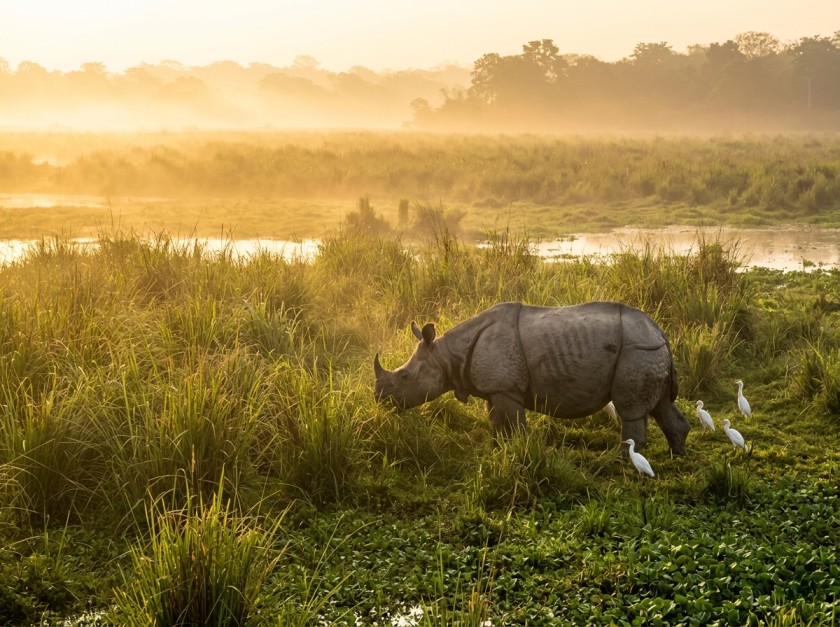
Kaziranga National Park is a UNESCO World Heritage Site and one of the most important wildlife conservation success stories in the world. Located along the southern bank of the Brahmaputra river in Assam, it is home to the world’s largest population of the Indian one-horned rhinoceros — over 2,600 individuals as of the 2022 census.
The park closes during the monsoon (June to October) due to flooding, making the pre-monsoon summer months of March to May the ideal final window for the season. The landscape of tall elephant grass, wetlands, and forest also shelters tigers, Asian elephants, wild water buffalo, and over 480 species of birds.
Top Attractions
- Jeep safari (Central and Eastern ranges): Best chance to spot rhinos, elephants, and tigers at close range — book at least 1 week in advance in peak season
- Elephant safari (Western range): A sunrise safari through grasslands for an immersive wildlife experience
- Kaziranga Orchid Park: Over 500 species of orchids in a dedicated conservation garden
- Birdwatching: Over 480 bird species including the Greater Adjutant Stork and Pallas’s Fish Eagle
- Kakochang Tea Estate: A working tea garden adjacent to the park offering estate tours
Quick Facts
| Altitude | 40 – 80 m (lowland park) |
| Summer Temperature | 24°C – 34°C (carry light cottons) |
| Best Time to Visit | November – May (park closes June–October) |
| Nearest Airport | Jorhat Airport (97 km) | Guwahati Airport (217 km) |
| Average Trip Cost | ₹8,000 – ₹16,000 per person for 2 nights (including safari fees) |
| Permit Required | Safari permit required — book via kaziranga.assam.gov.in |
Safari Tip Book jeep safaris via the official Assam Forest Department portal at least 7–10 days ahead for peak months (March–May). The Central Range offers the highest rhino density; the Eastern Range is best for bird diversity.
07
Pelling, Sikkim — Kanchenjunga Viewpoint & Adventure Hub
Pelling is Sikkim’s most scenic viewpoint town, perched at 2,150 metres in West Sikkim and offering what many travellers describe as the best unobstructed view of Mount Kanchenjunga (8,586 m) in India. On clear pre-monsoon mornings, the world’s third-highest peak fills the horizon in shades of pink, gold, and white.
The newly built Pelling Skywalk — a glass-floored horseshoe bridge over a cliff — has become one of Sikkim’s most photographed experiences. The town also offers monasteries, waterfalls, trekking routes, and Asia’s second-highest suspension bridge.
Top Attractions
- Pelling Skywalk: A glass-floored cantilever walkway at 7,200 feet offering jaw-dropping Himalayan views
- Rabdentse Ruins: The ancient capital of the Kingdom of Sikkim, a short uphill walk from Pelling
- Khecheopalri Lake: A sacred lake in a forested valley, 34 km from Pelling — believed to grant wishes
- Singshore Bridge: Asia’s second-highest suspension bridge at 198 m above the gorge
- Rimbi Waterfall & Rock Garden: A picturesque waterfall accessible by a short trek
Quick Facts
| Altitude | 2,150 m |
| Summer Temperature | 10°C – 18°C |
| Best Time to Visit | March – May (clear Kanchenjunga views) |
| Nearest Airport | Bagdogra Airport (125 km) |
| Average Trip Cost | ₹9,000 – ₹16,000 per person for 3 nights |
| Permit Required | PAP for some restricted areas — check with hotel on arrival |
| Wizzride Route | Bagdogra Airport → Pelling (reserved cab recommended — mountain roads) |
🚖 Getting to Pelling from Bagdogra Airport? Wizzride’s reserved cab service from Bagdogra covers the full Sikkim circuit including Gangtok and Pelling. See the complete Sikkim shared cab guide.
08
Dawki, Meghalaya — Where Boats Float in Mid-Air
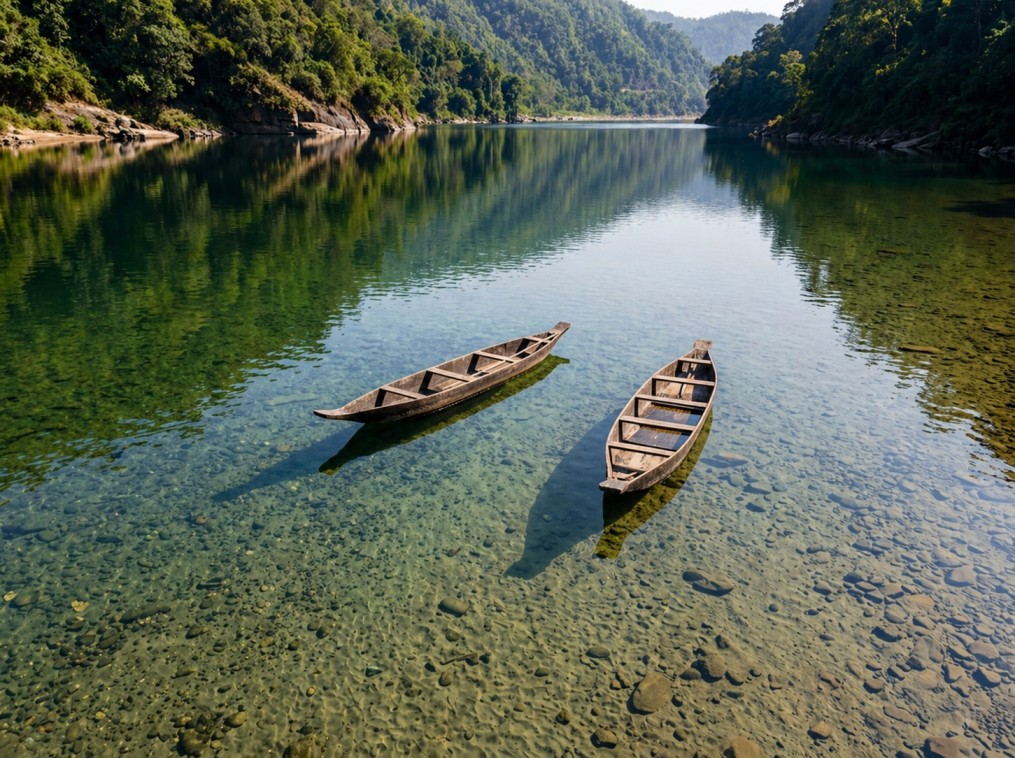
Dawki is a small border town in the Jaintia Hills district of Meghalaya, sitting on the Indo-Bangladesh border along the Umngot River — considered the cleanest river in India. The water is so crystal-clear that boats appear to hover in mid-air above the sandy riverbed, creating a near-surreal visual that makes Dawki one of the most viral travel destinations in India.
The best time to experience it is between December and May, before the monsoon turns the water murky. A boat ride on the Umngot is a once-in-a-lifetime experience that stays with every traveller long after they leave.
Top Attractions
- Umngot River boating: A 30–60 minute boat ride over crystal-clear water — the main attraction
- Dawki Suspension Bridge: A 93-metre colonial-era suspension bridge built in 1932, crossing the Umngot
- Shnongpdeng village: A riverside eco-tourism hub offering kayaking, camping, and cliff jumping
- Wah Kaba Falls: A stunning two-tiered waterfall 8 km from Dawki town
- Bangladesh border viewing point: A unique look at the India-Bangladesh boundary
Quick Facts
| Altitude | 65 m (lowland) |
| Summer Temperature | 22°C – 32°C |
| Best Time to Visit | December – May (before monsoon muddies the water) |
| Nearest Airport | Umroi Airport (82 km) | Guwahati (160 km) |
| Average Trip Cost | ₹6,000 – ₹10,000 per person for 1–2 nights |
| Permit Required | No |
| Often Combined With | Shillong, Cherrapunji — easy 3-destination Meghalaya circuit |
09
Majuli, Assam — World’s Largest River Island
Majuli is a place unlike any other in India. Located in the Brahmaputra river in Assam, it is officially the world’s largest river island and the cultural heartland of Vaishnavite Assam. The island is home to 22 satras — centuries-old monastic institutions that have preserved classical Assamese dance, music, mask-making, and manuscript traditions.
Majuli has a sense of urgency attached to it — its land area has reduced significantly due to erosion, making it a destination worth visiting sooner rather than later. Summer offers peaceful immersion in daily monastic life and birdwatching in the wetlands.
Top Attractions
- Kamalabari, Auniati & Garamur Satras: The most accessible and welcoming of Majuli’s monastic institutions
- Mask-making workshops: Several satras welcome visitors to observe the creation of traditional bamboo and papier-mâché masks
- Mising tribal villages: Homestays in stilt houses with local Mising families — a deeply authentic cultural experience
- Auniati Satra Museum: A collection of ancient gold ornaments, jewellery, utensils, and manuscripts
- Birdwatching: Majuli’s wetlands attract migratory and resident species including the Greater Adjutant Stork
Quick Facts
| Altitude | 85 m (river island) |
| Summer Temperature | 25°C – 34°C |
| Best Time to Visit | October – April (pre-monsoon for full access) |
| How to Reach | Ferry from Nimatighat, 15 km from Jorhat town — ferries run from 8 AM, ~1.5 hours |
| Average Trip Cost | ₹5,000 – ₹10,000 per person for 2 nights |
| Permit Required | No |
Access Tip Ferries from Nimatighat operate from 8 AM and take approximately 1.5 hours. By late May and June, flooding can restrict ferry services. Check with the Assam State Transport Corporation before planning your trip.
10
Yumthang Valley, Sikkim — Valley of Flowers PAP Required
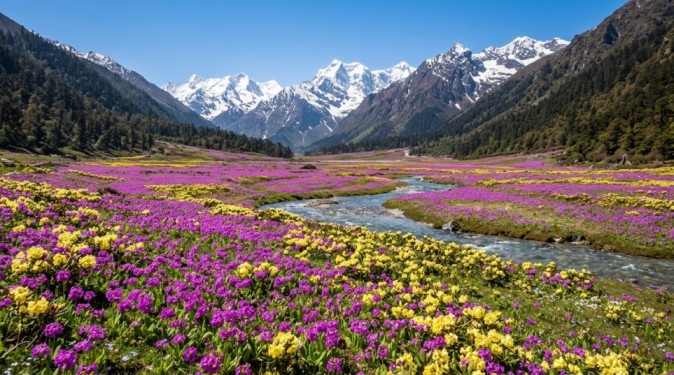
Yumthang Valley is Sikkim’s most famous natural spectacle — a wide alpine valley at 3,564 metres surrounded by snow-capped peaks and carpeted with wildflowers from late March through May. Sometimes called the Valley of Flowers of the Northeast, it earns that title through a spectacular bloom of primula, rhododendrons, irises, and poppies.
Many travellers combine Yumthang with Zero Point (Yumesamdong), a snow-covered plateau at 4,428 metres accessible in early summer before the snow melts. The base camp is the charming village of Lachung, offering traditional Sikkimese homestays.
Top Attractions
- Yumthang Valley flower meadows: Peak bloom is between March and May — rhododendrons, primula, and yak grazing on the slopes
- Zero Point (Yumesamdong): A snow-covered plateau at 4,428 m, 25 km beyond Yumthang — snow persists until June
- Shingba Rhododendron Sanctuary: A 43 sq km sanctuary protecting 24 species of rhododendron, en route to Yumthang
- Hot Springs at Yumthang: Natural sulphur springs with therapeutic properties at the valley entrance
- Lachung village: The charming base camp with traditional Sikkimese houses and welcoming homestays
Quick Facts
| Altitude | 3,564 m |
| Summer Temperature | 0°C – 12°C (carry heavy woollens) |
| Best Time to Visit | March – June (peak bloom March–May) |
| Nearest Airport | Bagdogra Airport (170 km from Gangtok) |
| Average Trip Cost | ₹12,000 – ₹22,000 per person for 4 nights (Gangtok–Lachung–Yumthang circuit) |
| Permit Required | Protected Area Permit (PAP) for North Sikkim — arrange through a registered Sikkim tour operator |
| Wizzride Route | Bagdogra Airport → Gangtok → Lachung (reserved cab recommended) |
🚖 Planning the Bagdogra to Gangtok to Lachung circuit? Wizzride covers the full journey from Bagdogra Airport to Gangtok and onward to Lachung for the Yumthang Valley visit. Read the Sikkim shared cab guide.
Quick Comparison: All 10 Destinations at a Glance
| Destination | Altitude | Summer Temp | Best For | Permit? |
|---|---|---|---|---|
| Shillong | 1,491 m | 16–22°C | City + nature | No |
| Gangtok | 1,650 m | 10–20°C | Himalayan views | Nathula only |
| Tawang | 3,048 m | 5–15°C | Spiritual + adventure | ILP (mandatory) |
| Cherrapunji | 1,484 m | 16–22°C | Waterfalls + treks | No |
| Ziro Valley | 1,500 m | 14–24°C | Culture + offbeat | ILP (mandatory) |
| Kaziranga | 40–80 m | 24–34°C | Wildlife safaris | Safari permit |
| Pelling | 2,150 m | 10–18°C | Views + adventure | Partial areas |
| Dawki | 65 m | 22–32°C | River + photography | No |
| Majuli | 85 m | 25–34°C | Culture + spirituality | No |
| Yumthang | 3,564 m | 0–12°C | Flowers + snow | PAP (mandatory) |
Practical Travel Tips for Northeast India in Summer
Permits & Documentation
Several Northeast states require Inner Line Permits (ILP) or Protected Area Permits (PAP) for Indian nationals. Foreign nationals require a separate Restricted Area Permit (RAP).
- Arunachal Pradesh ILP: Apply online at eilp.arunachal.gov.in — costs ₹100, takes 24–48 hours
- North Sikkim PAP: Must be arranged through a Sikkim-registered tour operator; individual applications are not accepted
- Carry 5–6 passport-size photos and government ID photocopies — checkposts ask for these at multiple entry points
- Losing your permit can cause significant delays — keep a digital copy backed up on your phone
Clothing & Packing
- High-altitude destinations (Tawang, Yumthang, Gangtok): Heavy fleece jacket, thermal innerwear, and windproof outer layer — even in summer
- Lowland destinations (Kaziranga, Majuli, Dawki): Light cottons and linen; carry sunscreen and a wide-brim hat
- Good walking shoes or trekking sandals are essential — trails can be muddy even in pre-monsoon months
- Pack a compact raincoat — Meghalaya in particular can receive sudden rainfall even in April and May
Getting Around
Northeast India’s road network has improved dramatically, but distances are deceptive. A 100 km journey in the hills often takes 3–4 hours due to winding mountain roads.
- Shared cabs (sumos): The traditional mode of intercity transport — affordable but crowded, with unpredictable departure times
- Reserved cabs: The most comfortable and flexible option for families and groups — Wizzride offers reserved cab bookings across Northeast routes
- Flights: Guwahati is the main hub. IndiGo, Air India, and SpiceJet operate routes to Jorhat, Dimapur, Imphal, and Aizawl
- Ferries: Essential for Majuli — depart from Nimatighat (Jorhat) from 8 AM
Health & Safety
- Altitude sickness: At destinations above 3,000 m (Tawang, Yumthang, Nathula), ascend gradually, stay hydrated, and carry Diamox if altitude-sensitive — consult your doctor
- Medical facilities: Basic hospitals in major towns. For remote destinations, carry a first-aid kit with basic medicines
- Mobile connectivity: Airtel and BSNL have the widest coverage in remote areas. Jio can be patchy beyond major towns
- Water: Drink only bottled or filtered water — even clear mountain streams can carry giardia
- Emergency number: 112 works across all Northeast states
Budget Guide
| Budget Category | Accommodation / night | Meals / day | Transport |
|---|---|---|---|
| Budget (backpacker) | ₹500–₹1,200 (dorms, guesthouses) | ₹200–₹400 (dhabas, local joints) | Shared cabs + buses |
| Mid-range | ₹1,500–₹3,500 (3-star hotels) | ₹500–₹900 (hotel + restaurants) | Reserved cabs (Wizzride) |
| Premium | ₹4,000–₹12,000 (boutique, heritage) | ₹1,000+ (multi-cuisine) | Private cabs + flights |
Conclusion
Northeast India remains one of the most underrated summer travel regions in the world. Its combination of cool Himalayan altitudes, ancient cultures, extraordinary wildlife, and untouched natural beauty makes it a destination that rewards every type of traveller — from the first-timer looking for a hill-station escape to the seasoned explorer seeking offbeat cultural immersion.
Whether you choose the accessible charm of Shillong and Gangtok, the spiritual depth of Tawang and Majuli, the ecological wonder of Kaziranga, or the extraordinary visual spectacles of Dawki and Yumthang — you will leave with memories that no crowded mainstream destination can offer.
The key to a great Northeast India trip is planning. Permits, transport, and accommodations must be sorted well in advance, especially for the April–May peak window.
Start Planning with Wizzride Shared cabs, reserved Innova Crysta transfers, and flight bookings across all major Northeast routes — managed in one place. Visit wizzride.com or book via the Wizzride app (Android / iOS).
Useful Resources
Frequently Asked Questions
Which is the best summer destination in Northeast India for first-time visitors?
Shillong (Meghalaya) and Gangtok (Sikkim) are the top picks for first-timers. Both have excellent road connectivity, a wide range of accommodation options, no permit requirements for most areas, and enough attractions to fill 3–4 days comfortably. Shillong is ideal for a vibrant city experience with nature day trips; Gangtok is better if you want close-up Himalayan views.
Is Northeast India safe for solo travellers and families?
Yes. Northeast India has a reputation for being one of the safest travel regions in India. The local population across all eight states is known for being warm and hospitable to visitors. Standard precautions apply — keep copies of your permits and ID, avoid travelling alone after dark on mountain roads, and share your itinerary with someone at home.
What is the best time to visit Northeast India?
March to May is the sweet spot for summer travel — weather is pleasant (15°C–25°C in most hill stations), flowers are in bloom, and the monsoon has not yet begun. October to February is also excellent for wildlife (Kaziranga) and cultural festivals. Avoid June to September for most destinations, as heavy monsoon can block roads and suspend ferry services.
How many days do I need for a Northeast India trip?
A 7–10 day trip is sufficient to explore 2–3 destinations in depth. For a broader circuit covering Meghalaya, Sikkim, and Assam, plan for 12–15 days. Tawang deserves at least 4–5 days on its own given the travel time involved. Avoid rushing — the best Northeast India experiences come from spending time in each place.
Do I need a permit to visit Arunachal Pradesh and Sikkim?
Yes. Indian nationals require an Inner Line Permit (ILP) to enter Arunachal Pradesh. Apply online at eilp.arunachal.gov.in — the process costs ₹100 and takes 24–48 hours. For North Sikkim (including Yumthang Valley), a Protected Area Permit (PAP) is required and must be arranged through a registered Sikkim tour operator. Foreign nationals need a Restricted Area Permit (RAP) in addition.
How can I book cabs for travel within Northeast India?
Wizzride is a reliable option for both shared and reserved cab bookings across major Northeast India routes — including Guwahati to Shillong, Bagdogra to Gangtok, Jorhat to Majuli, and more. Booking in advance is strongly recommended for peak summer months (April–May). Shared cabs are budget-friendly; reserved cabs offer more comfort and flexibility for families and groups.
What are the must-try foods in Northeast India?
Each state has a distinct cuisine. In Meghalaya, try Jadoh (rice cooked with pork), Doh Khleh (pork salad), and Pumaloi (steamed rice cake). In Sikkim, look for Momos, Thukpa, and Chhurpi (hard yak cheese). In Assam, Masor Tenga (sour fish curry) and Khar (alkaline curry) are local staples. In Arunachal Pradesh, Apong (rice beer) is a cultural staple served at homestays and festivals.